DATA
WRANGLING
Dr. Ajay Kumar Koli, PhD | SARA Institute of Data Science, India
Data Wrangling
“data exploration and data manipulation” by Jesse Mostipak
“tidying and transforming” by Hadley & Garrett
Transforming Data
“narrowing in on observations of interest …
creating new variables that are functions of existing variables and …
calculating a set of summary statistics.”
R Package dplyr
dplyr Package
“dplyr is a grammar of data manipulation”
“providing a consistent set of verbs that help you solve the most common data manipulation challenges:”
dplyr Functions:
filter()select()mutate()arrange()summarise()
filter() Function:
Picks cases/observations based on their values.
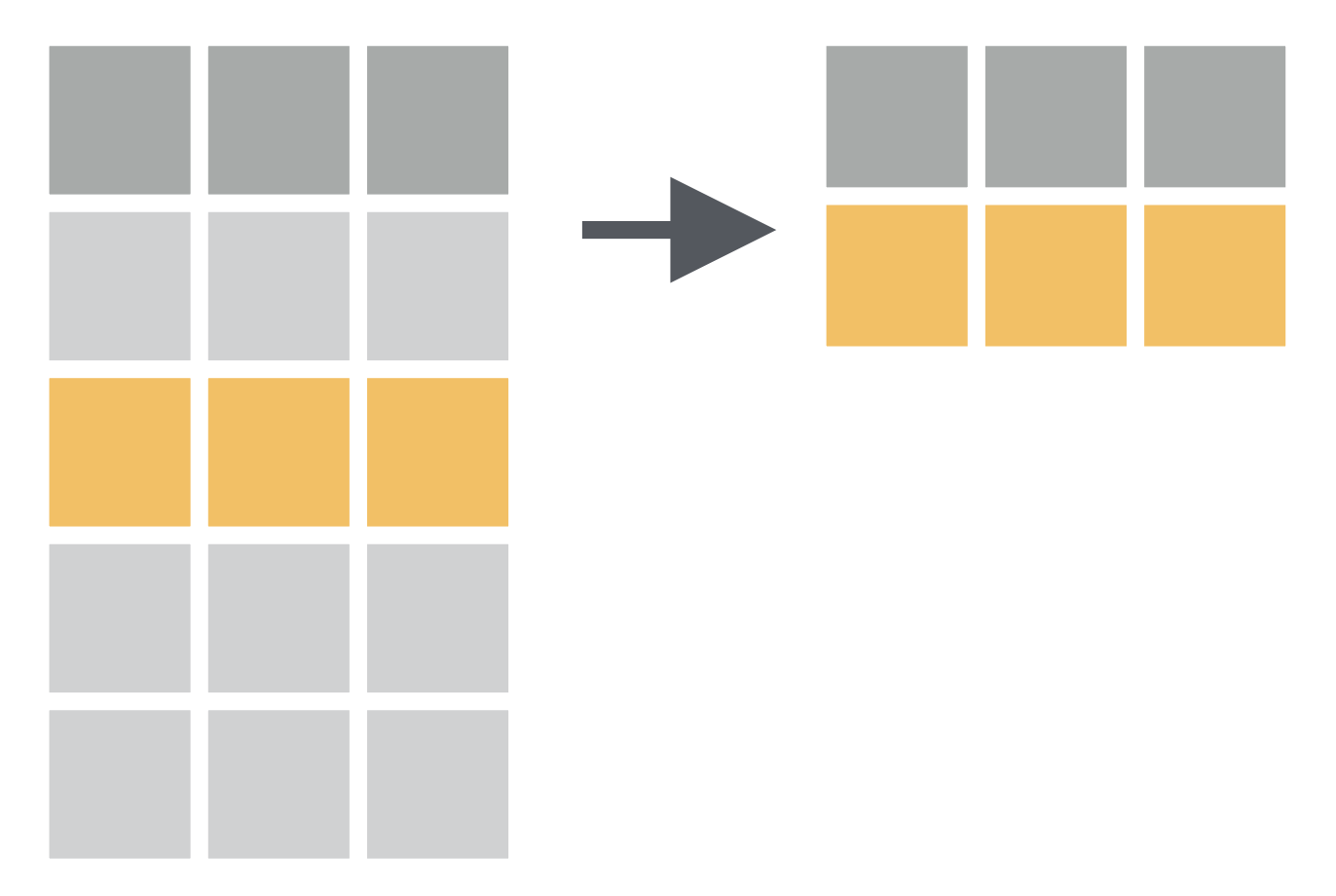
filter() Function
How to have a data of only Gentoo penguins?
# A tibble: 124 × 8
   species island bill_length_mm bill_depth_mm flipper_length_mm body_mass_g
   <fct>   <fct>           <dbl>         <dbl>             <int>       <int>
 1 Gentoo  Biscoe           46.1          13.2               211        4500
 2 Gentoo  Biscoe           50            16.3               230        5700
 3 Gentoo  Biscoe           48.7          14.1               210        4450
 4 Gentoo  Biscoe           50            15.2               218        5700
 5 Gentoo  Biscoe           47.6          14.5               215        5400
 6 Gentoo  Biscoe           46.5          13.5               210        4550
 7 Gentoo  Biscoe           45.4          14.6               211        4800
 8 Gentoo  Biscoe           46.7          15.3               219        5200
 9 Gentoo  Biscoe           43.3          13.4               209        4400
10 Gentoo  Biscoe           46.8          15.4               215        5150
# ℹ 114 more rows
# ℹ 2 more variables: sex <fct>, year <int>
Wait! What is |>
This is called native pipe operator
|>let you “pipe” an object forward to a function or call expressionallowing you to express a sequence of operations that transform an object.
ctrl + shift + m =
|>
filter() Function
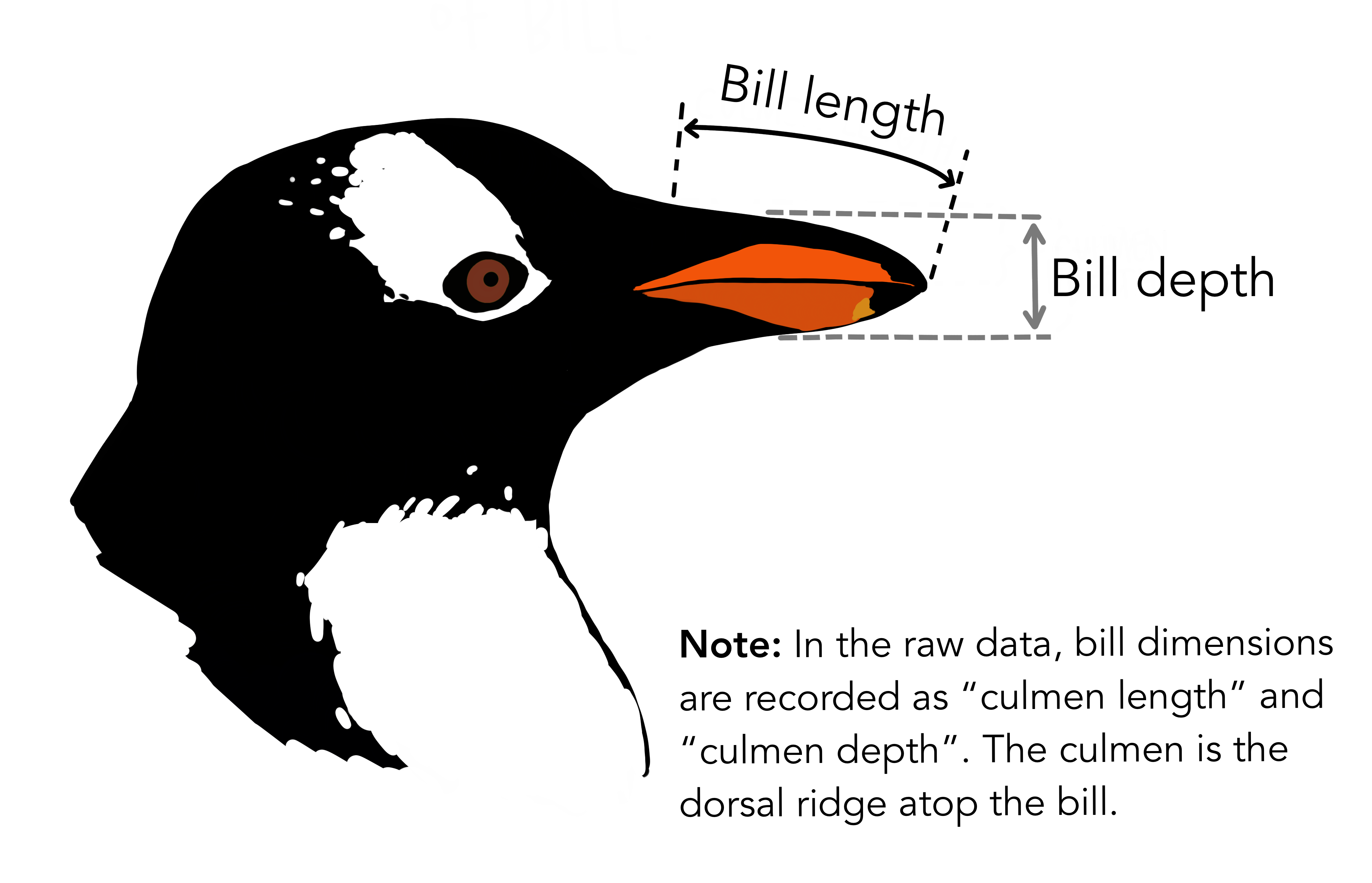
How to have a data of penguins of bill length more than 43 mm?
# A tibble: 188 × 8
   species island    bill_length_mm bill_depth_mm flipper_length_mm body_mass_g
   <fct>   <fct>              <dbl>         <dbl>             <int>       <int>
 1 Adelie  Torgersen           46            21.5               194        4200
 2 Adelie  Dream               44.1          19.7               196        4400
 3 Adelie  Torgersen           45.8          18.9               197        4150
 4 Adelie  Dream               43.2          18.5               192        4100
 5 Adelie  Biscoe              43.2          19                 197        4775
 6 Adelie  Biscoe              45.6          20.3               191        4600
 7 Adelie  Torgersen           44.1          18                 210        4000
 8 Adelie  Torgersen           43.1          19.2               197        3500
 9 Gentoo  Biscoe              46.1          13.2               211        4500
10 Gentoo  Biscoe              50            16.3               230        5700
# ℹ 178 more rows
# ℹ 2 more variables: sex <fct>, year <int>
🧠 YOUR TURN
How to have a data of only Adele penguins?
How to have a data of penguins of bill depth more than 10 mm?
# A tibble: 152 × 8
   species island    bill_length_mm bill_depth_mm flipper_length_mm body_mass_g
   <fct>   <fct>              <dbl>         <dbl>             <int>       <int>
 1 Adelie  Torgersen           39.1          18.7               181        3750
 2 Adelie  Torgersen           39.5          17.4               186        3800
 3 Adelie  Torgersen           40.3          18                 195        3250
 4 Adelie  Torgersen           NA            NA                  NA          NA
 5 Adelie  Torgersen           36.7          19.3               193        3450
 6 Adelie  Torgersen           39.3          20.6               190        3650
 7 Adelie  Torgersen           38.9          17.8               181        3625
 8 Adelie  Torgersen           39.2          19.6               195        4675
 9 Adelie  Torgersen           34.1          18.1               193        3475
10 Adelie  Torgersen           42            20.2               190        4250
# ℹ 142 more rows
# ℹ 2 more variables: sex <fct>, year <int>
# A tibble: 342 × 8
species island bill_length_mm bill_depth_mm flipper_length_mm body_mass_g
<fct> <fct> <dbl> <dbl> <int> <int>
1 Adelie Torgersen 39.1 18.7 181 3750
2 Adelie Torgersen 39.5 17.4 186 3800
3 Adelie Torgersen 40.3 18 195 3250
4 Adelie Torgersen 36.7 19.3 193 3450
5 Adelie Torgersen 39.3 20.6 190 3650
6 Adelie Torgersen 38.9 17.8 181 3625
7 Adelie Torgersen 39.2 19.6 195 4675
8 Adelie Torgersen 34.1 18.1 193 3475
9 Adelie Torgersen 42 20.2 190 4250
10 Adelie Torgersen 37.8 17.1 186 3300
# ℹ 332 more rows
# ℹ 2 more variables: sex <fct>, year <int>10:00
filter() Function
How to have a data of Gentoo penguins of bill length more than 50 mm?
# A tibble: 22 × 8
   species island bill_length_mm bill_depth_mm flipper_length_mm body_mass_g
   <fct>   <fct>           <dbl>         <dbl>             <int>       <int>
 1 Gentoo  Biscoe           50.2          14.3               218        5700
 2 Gentoo  Biscoe           59.6          17                 230        6050
 3 Gentoo  Biscoe           50.5          15.9               222        5550
 4 Gentoo  Biscoe           50.5          15.9               225        5400
 5 Gentoo  Biscoe           50.1          15                 225        5000
 6 Gentoo  Biscoe           50.4          15.3               224        5550
 7 Gentoo  Biscoe           54.3          15.7               231        5650
 8 Gentoo  Biscoe           50.7          15                 223        5550
 9 Gentoo  Biscoe           51.1          16.3               220        6000
10 Gentoo  Biscoe           52.5          15.6               221        5450
# ℹ 12 more rows
# ℹ 2 more variables: sex <fct>, year <int>
filter() Function
How to have a data of non-Gentoo penguins of bill length more than 50 mm and weight more than 4 kg?
# A tibble: 11 × 8
   species   island bill_length_mm bill_depth_mm flipper_length_mm body_mass_g
   <fct>     <fct>           <dbl>         <dbl>             <int>       <int>
 1 Chinstrap Dream            52            18.1               201        4050
 2 Chinstrap Dream            50.5          19.6               201        4050
 3 Chinstrap Dream            52            19                 197        4150
 4 Chinstrap Dream            52.8          20                 205        4550
 5 Chinstrap Dream            54.2          20.8               201        4300
 6 Chinstrap Dream            51            18.8               203        4100
 7 Chinstrap Dream            52            20.7               210        4800
 8 Chinstrap Dream            53.5          19.9               205        4500
 9 Chinstrap Dream            50.8          18.5               201        4450
10 Chinstrap Dream            50.7          19.7               203        4050
11 Chinstrap Dream            50.8          19                 210        4100
# ℹ 2 more variables: sex <fct>, year <int>
🧠 YOUR TURN
How to have a data of penguins only from the Dream island which have bill depth more than 7 mm and weight more than 3 kg?
# A tibble: 118 × 8
   species island bill_length_mm bill_depth_mm flipper_length_mm body_mass_g
   <fct>   <fct>           <dbl>         <dbl>             <int>       <int>
 1 Adelie  Dream            39.5          16.7               178        3250
 2 Adelie  Dream            37.2          18.1               178        3900
 3 Adelie  Dream            39.5          17.8               188        3300
 4 Adelie  Dream            40.9          18.9               184        3900
 5 Adelie  Dream            36.4          17                 195        3325
 6 Adelie  Dream            39.2          21.1               196        4150
 7 Adelie  Dream            38.8          20                 190        3950
 8 Adelie  Dream            42.2          18.5               180        3550
 9 Adelie  Dream            37.6          19.3               181        3300
10 Adelie  Dream            39.8          19.1               184        4650
# ℹ 108 more rows
# ℹ 2 more variables: sex <fct>, year <int>07:00
select() Function:
Picks variables/columns based on their names.
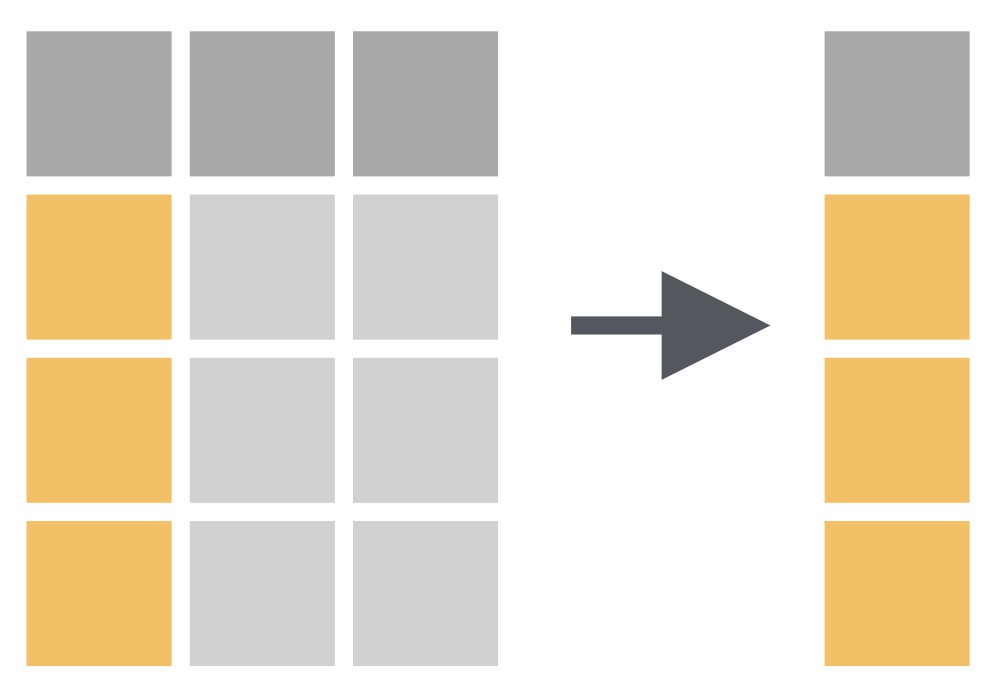
select() Function
select() Function
🧠 YOUR TURN
How to have a data of variables sex, year, island and flipper length?
# A tibble: 344 × 4
   sex     year island    flipper_length_mm
   <fct>  <int> <fct>                 <int>
 1 male    2007 Torgersen               181
 2 female  2007 Torgersen               186
 3 female  2007 Torgersen               195
 4 <NA>    2007 Torgersen                NA
 5 female  2007 Torgersen               193
 6 male    2007 Torgersen               190
 7 female  2007 Torgersen               181
 8 male    2007 Torgersen               195
 9 <NA>    2007 Torgersen               193
10 <NA>    2007 Torgersen               190
# ℹ 334 more rows05:00
💡 Tips for variable selection
Use
names()function to see the exact names and the order of the variables.Use
:operator to select the range of variables.
- Use location value of the variable.
- Use
-operator to not to select the range of variables.
# A tibble: 344 × 4
   species body_mass_g sex     year
   <fct>         <int> <fct>  <int>
 1 Adelie         3750 male    2007
 2 Adelie         3800 female  2007
 3 Adelie         3250 female  2007
 4 Adelie           NA <NA>    2007
 5 Adelie         3450 female  2007
 6 Adelie         3650 male    2007
 7 Adelie         3625 female  2007
 8 Adelie         4675 male    2007
 9 Adelie         3475 <NA>    2007
10 Adelie         4250 <NA>    2007
# ℹ 334 more rows
🧠 YOUR TURN
How to have a data of variables from location first to fifth but without the variable island?
# A tibble: 344 × 4
   species bill_length_mm bill_depth_mm flipper_length_mm
   <fct>            <dbl>         <dbl>             <int>
 1 Adelie            39.1          18.7               181
 2 Adelie            39.5          17.4               186
 3 Adelie            40.3          18                 195
 4 Adelie            NA            NA                  NA
 5 Adelie            36.7          19.3               193
 6 Adelie            39.3          20.6               190
 7 Adelie            38.9          17.8               181
 8 Adelie            39.2          19.6               195
 9 Adelie            34.1          18.1               193
10 Adelie            42            20.2               190
# ℹ 334 more rows05:00
mutate() Function:
Adds new variables that are functions of existing variables.
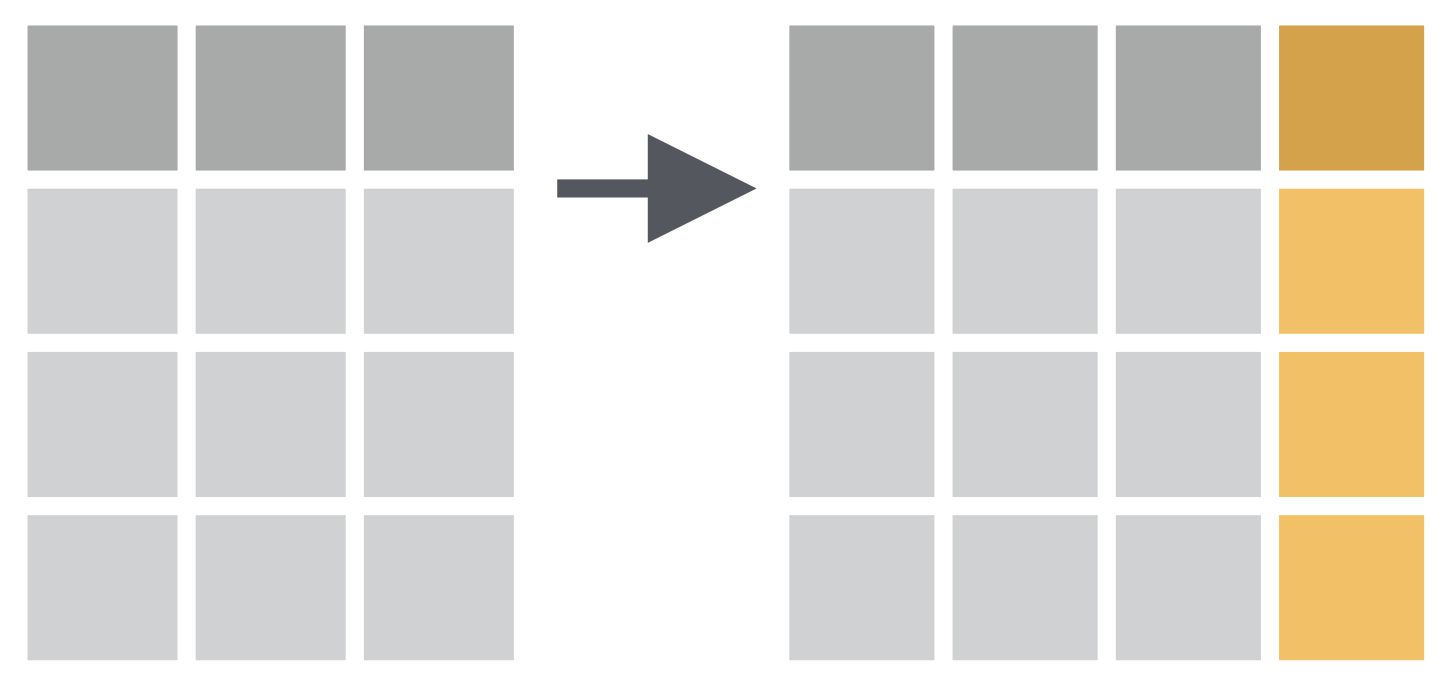
mutate() Function
How to convert body mass of penguins from grams to kilograms?
# A tibble: 344 × 2
   body_mass_g body_mass_kg
         <int>        <dbl>
 1        3750         3.75
 2        3800         3.8
 3        3250         3.25
 4          NA        NA
 5        3450         3.45
 6        3650         3.65
 7        3625         3.62
 8        4675         4.68
 9        3475         3.48
10        4250         4.25
# ℹ 334 more rows
mutate() Function
🧠 YOUR TURN
How to convert the bill dimensions from mm to cm?
# A tibble: 344 × 4
   bill_length_mm bill_depth_mm bill_length_cm `bill_depth_mm/10`
            <dbl>         <dbl>          <dbl>              <dbl>
 1           39.1          18.7           3.91               1.87
 2           39.5          17.4           3.95               1.74
 3           40.3          18             4.03               1.8
 4           NA            NA            NA                 NA
 5           36.7          19.3           3.67               1.93
 6           39.3          20.6           3.93               2.06
 7           38.9          17.8           3.89               1.78
 8           39.2          19.6           3.92               1.96
 9           34.1          18.1           3.41               1.81
10           42            20.2           4.2                2.02
# ℹ 334 more rows05:00
arrange() Function:
Changes the ordering of the rows.
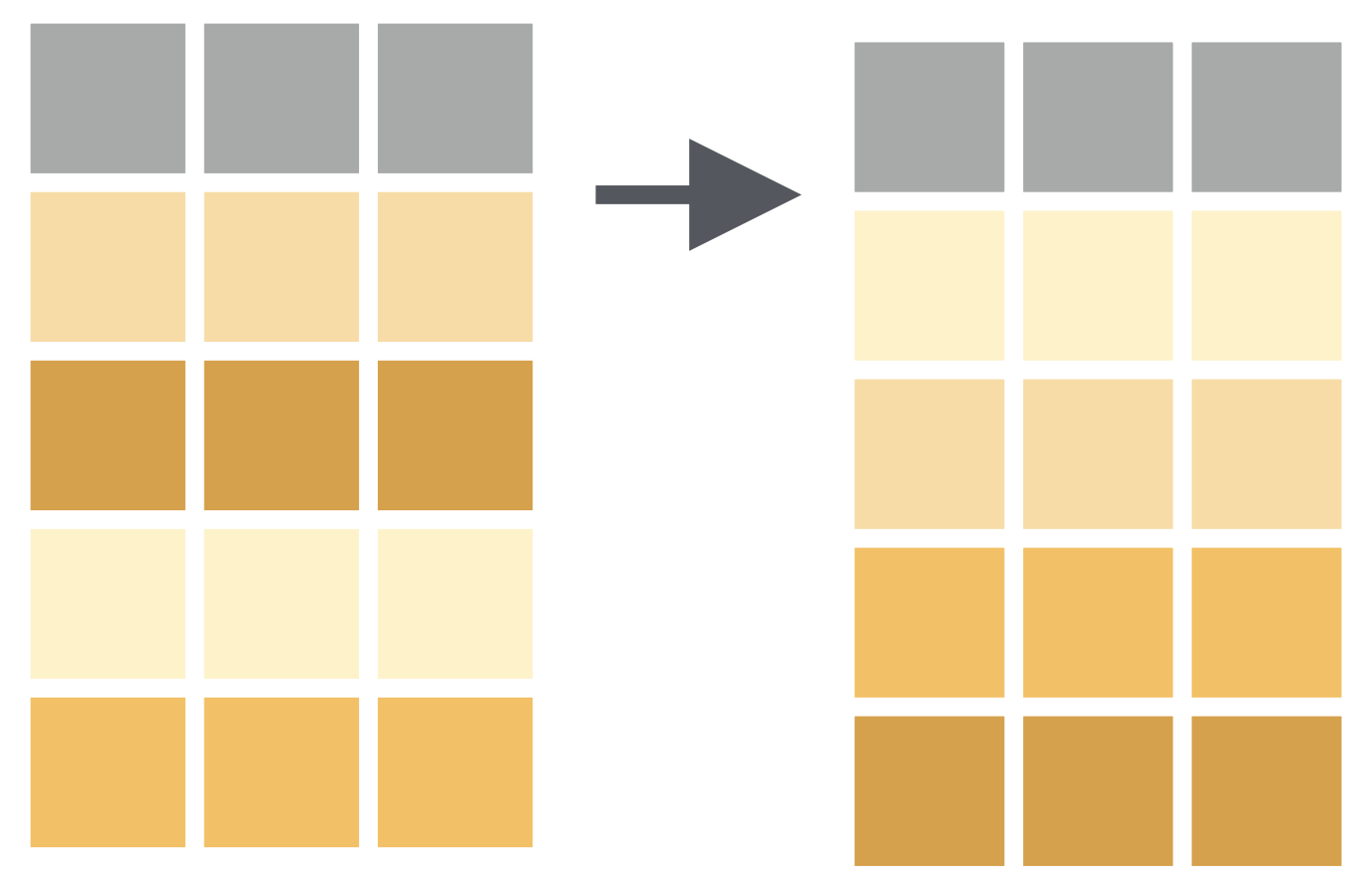
arrange() Function
How to arrange data as per the bill length of the penguins?
# A tibble: 344 × 8
   species island    bill_length_mm bill_depth_mm flipper_length_mm body_mass_g
   <fct>   <fct>              <dbl>         <dbl>             <int>       <int>
 1 Adelie  Dream               32.1          15.5               188        3050
 2 Adelie  Dream               33.1          16.1               178        2900
 3 Adelie  Torgersen           33.5          19                 190        3600
 4 Adelie  Dream               34            17.1               185        3400
 5 Adelie  Torgersen           34.1          18.1               193        3475
 6 Adelie  Torgersen           34.4          18.4               184        3325
 7 Adelie  Biscoe              34.5          18.1               187        2900
 8 Adelie  Torgersen           34.6          21.1               198        4400
 9 Adelie  Torgersen           34.6          17.2               189        3200
10 Adelie  Biscoe              35            17.9               190        3450
# ℹ 334 more rows
# ℹ 2 more variables: sex <fct>, year <int>
arrange() Function
How to see five penguins of the least bill length?
# A tibble: 5 × 8
  species island    bill_length_mm bill_depth_mm flipper_length_mm body_mass_g
  <fct>   <fct>              <dbl>         <dbl>             <int>       <int>
1 Adelie  Dream               32.1          15.5               188        3050
2 Adelie  Dream               33.1          16.1               178        2900
3 Adelie  Torgersen           33.5          19                 190        3600
4 Adelie  Dream               34            17.1               185        3400
5 Adelie  Torgersen           34.1          18.1               193        3475
# ℹ 2 more variables: sex <fct>, year <int>
🧠 YOUR TURN
How to see five penguins of the highest bill length?
# A tibble: 5 × 8
  species   island    bill_length_mm bill_depth_mm flipper_length_mm body_mass_g
  <fct>     <fct>              <dbl>         <dbl>             <int>       <int>
1 Gentoo    Biscoe              55.9          17                 228        5600
2 Chinstrap Dream               58            17.8               181        3700
3 Gentoo    Biscoe              59.6          17                 230        6050
4 Adelie    Torgersen           NA            NA                  NA          NA
5 Gentoo    Biscoe              NA            NA                  NA          NA
# ℹ 2 more variables: sex <fct>, year <int>05:00
summarise() Function:
Reduces multiple values down to a single summary.
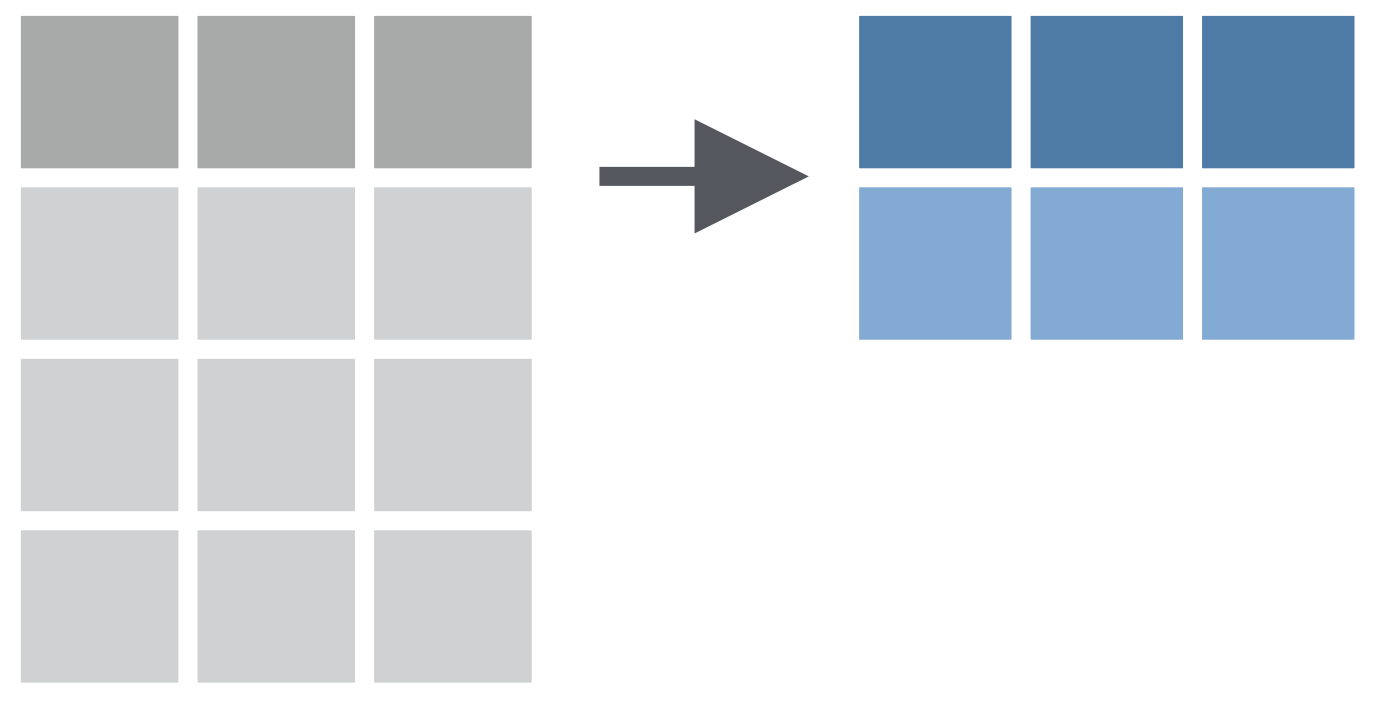
summarise() Function
summarise() Function
summarise() Function
summarise() Function
What is the species wise mean bill length of penguins and total number of penguins in each specie?
# A tibble: 3 × 3
  species   `mean(bill_length_mm)`     n
  <fct>                      <dbl> <int>
1 Adelie                      38.8   146
2 Chinstrap                   48.8    68
3 Gentoo                      47.6   119
🧠 YOUR TURN
05:00